Every star you can see is somewhere on a long road that begins in cold gas and ends in one of three remarkable objects: a white dwarf, a neutron star, or a black hole. The route depends on one number more than any other: mass. A star's birth mass decides how fiercely it burns, how long it lives, and what it leaves behind. Follow that road and you also follow the origin of the carbon, oxygen, and iron in your body.
Birth: Collapse in a Molecular Cloud
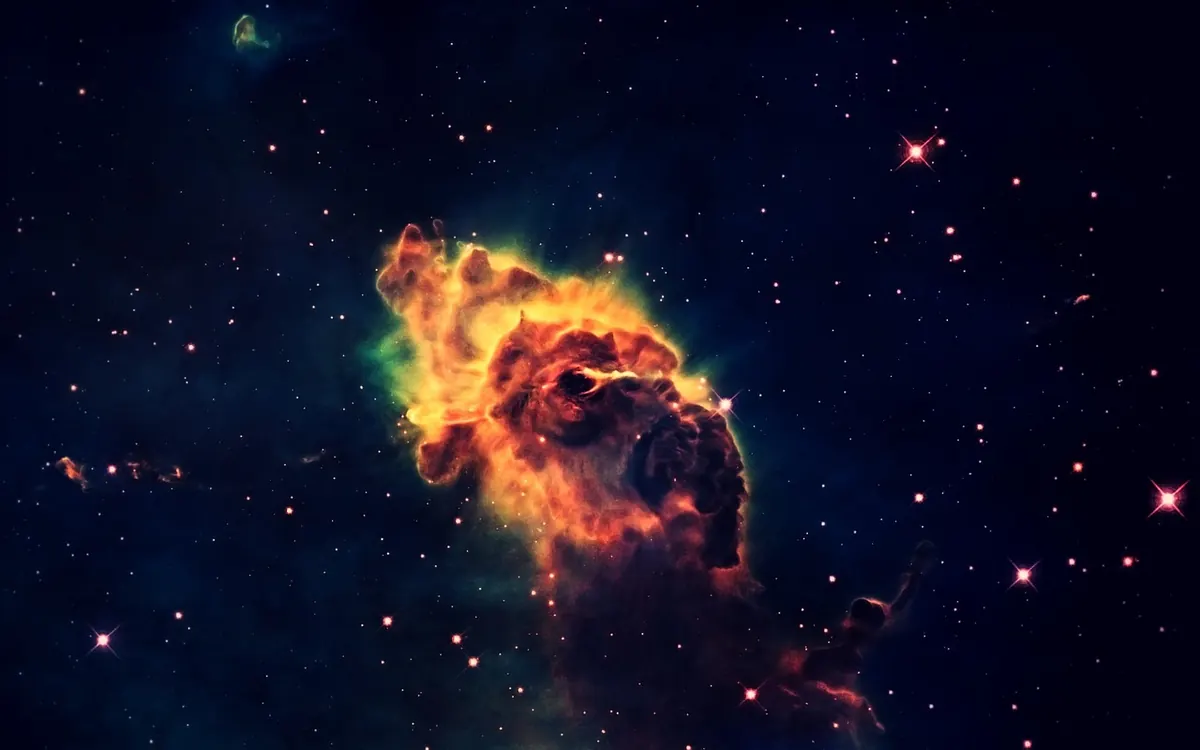
Stars begin in giant molecular clouds: cold, dark nebulae made mostly of hydrogen, with helium and dust. Gravity is patient. A shock wave from a nearby supernova, or a collision with another cloud, can push a dense clump past the point where gravity wins. The clump fragments, and each fragment contracts. As it shrinks, gravitational energy becomes heat. The centre grows hotter while a disc of gas and dust forms around it; jets often shoot from the poles. When the core reaches roughly 10 million kelvin, hydrogen fusion ignites. A star is born. The Orion Nebula is a nearby nursery; the Pleiades are young stars that have already left the cradle.
The Main Sequence: A Long, Stable Balance
The main sequence is not a place but a phase. The inward crush of gravity is balanced by outward pressure from fusion. In Sun-like stars, hydrogen nuclei fuse into helium through the proton-proton chain. More massive stars use the CNO cycle, which is more sensitive to temperature. The Sun converts roughly 600 million tonnes of hydrogen into helium every second, turning about 4 million tonnes of matter into energy. That is why it shines.
Mass dictates everything. A red dwarf with a tenth of the Sun's mass sips fuel and can last trillions of years. A star 20 times the Sun's mass blazes thousands of times brighter and exhausts its core in a few million years. The more massive the star, the shorter its life.
Red Giants and Supergiants: The Fuel Runs Out
When core hydrogen is spent, fusion stops in the centre. The core contracts and heats; hydrogen fusion moves to a shell. The outer layers swell and cool, so the star becomes a red giant. In the Sun's case, this will happen in about five billion years. Helium then fuses into carbon through the triple-alpha process.
For massive stars, the process repeats: carbon, neon, oxygen, and silicon burn in shells around an iron core. Iron is the end of the line for fusion. Fusing iron nuclei does not release energy; it consumes it. So the core can no longer support itself. The star is living on borrowed time.
Death of Sun-like Stars: A Quiet Exit
For a star with less than about eight times the Sun's mass, the end is relatively gentle. The outer layers drift away as a planetary nebula—a glowing shell of gas illuminated by the exposed core. That core becomes a white dwarf: an Earth-sized ember containing roughly the Sun's mass. It no longer fuses anything. Instead, it is held up by electron degeneracy pressure, a quantum rule that prevents electrons from being packed too closely. A white dwarf can shine faintly for billions of years, slowly cooling toward a theoretical black dwarf. Sirius B, the companion of the bright star Sirius, is a nearby example.
Death of Massive Stars: Supernova and the Compact Remnants
In a star more than eight times the Sun's mass, the iron core collapses in less than a second. The infall rebounds, and the star explodes as a core-collapse supernova. For a few weeks, it can outshine an entire galaxy. The explosion scatters heavy elements into space and leaves behind one of two exotic objects.
If the remnant core is between about 1.4 and 3 solar masses, it becomes a neutron star. Neutron stars are city-sized—about 20 kilometres across—and so dense that a teaspoon would weigh billions of tonnes. Some spin hundreds of times per second and beam radio waves like cosmic lighthouses; these are pulsars. The Crab Nebula, the wreckage of a supernova seen in 1054, contains a famous pulsar at its heart.
If the core is heavier still, nothing can stop the collapse. It becomes a black hole: a region where gravity is so intense that not even light can escape. The boundary of no return is the event horizon. The first black hole ever imaged, in galaxy M87, has a mass billions of times that of the Sun, but stellar-mass black holes form directly from massive stars. Cygnus X-1, discovered in the 1960s, is a well-known stellar black hole feeding on a companion star.
The Mass Rule: What Leaves What
The exact dividing lines are approximate, but a simple guide is useful:
- Less than 0.5 solar masses: Red dwarf. These stars burn hydrogen slowly and can last trillions of years—longer than the current age of the universe. None have died yet.
- 0.5 to 8 solar masses: Red giant, then planetary nebula, then white dwarf.
- 8 to 20 solar masses: Red supergiant, then core-collapse supernova, then neutron star.
- More than 20 solar masses: Supernova or direct collapse, then black hole.
Metallicity—the abundance of elements heavier than helium—and mass loss through stellar winds can shift these outcomes. A star that sheds most of its mass may leave a neutron star even if it began massive. Betelgeuse, a red supergiant in Orion, is a nearby candidate for a future supernova, though it is likely to leave a neutron star rather than a black hole.
Why This Matters: The Elements in Your Body
The life cycle of stars is not an abstract story. The calcium in your bones, the iron in your blood, and the oxygen you breathe were forged inside stars. Hydrogen and helium came from the Big Bang, but almost everything heavier was made by fusion in stellar cores or during supernova explosions. When a massive star dies, it seeds the next generation of molecular clouds with these elements. That enrichment is why the Sun and Earth contain rocky planets and why life is possible. As the astronomer Carl Sagan put it, we are made of starstuff.
Observing the Life Cycle
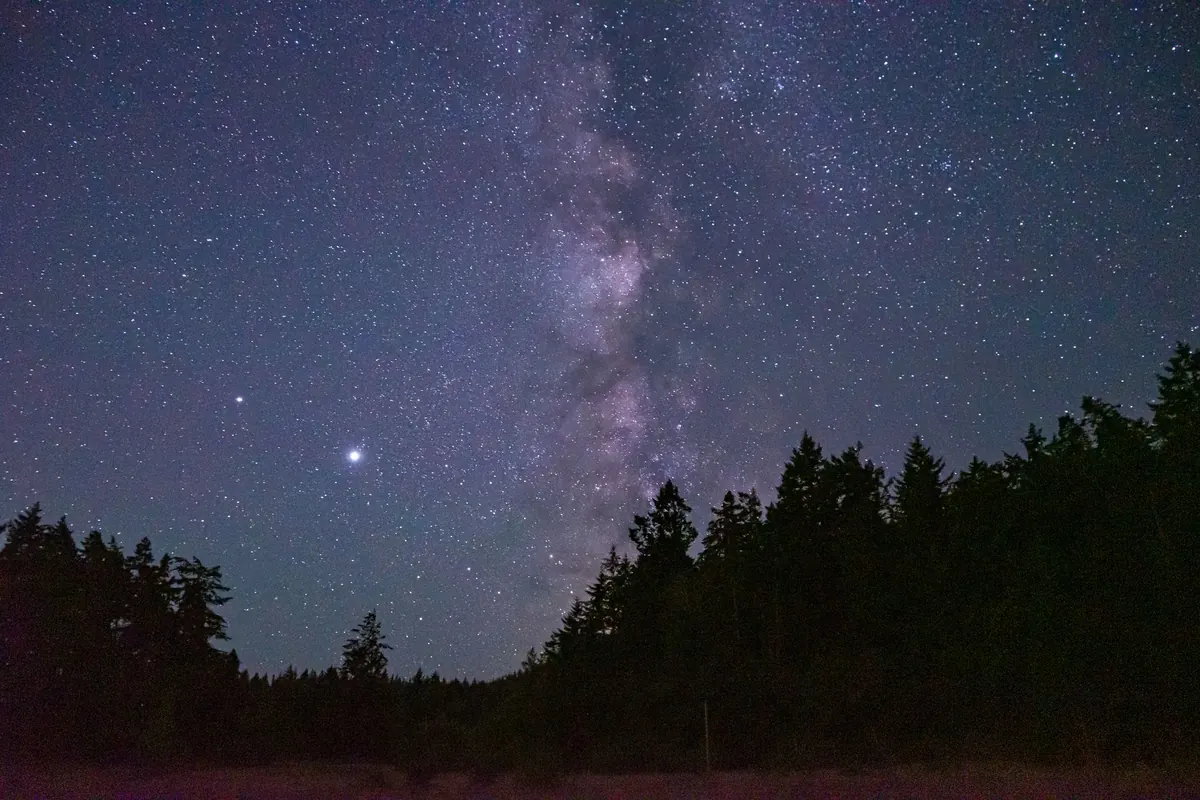
You can see different stages with your own eyes or a small telescope. The Orion Nebula is a stellar nursery. The Pleiades are hot, young stars. Betelgeuse and Antares are red supergiants near the end of their lives. The Ring Nebula and the Dumbbell Nebula are planetary nebulae—white dwarf remnants. The Crab Nebula is a supernova remnant. Each object is a snapshot of a process that takes millions or billions of years. Together, they reveal the full arc from nebula to black hole.
Every star, including the Sun, is a temporary balance between gravity and energy. The balance ends, but the material does not disappear. It returns to the galaxy, ready to become new stars, new planets, and perhaps new life. The road from nebula to black hole is also the road that led to us.
Photo: WikiImages / Pixabay