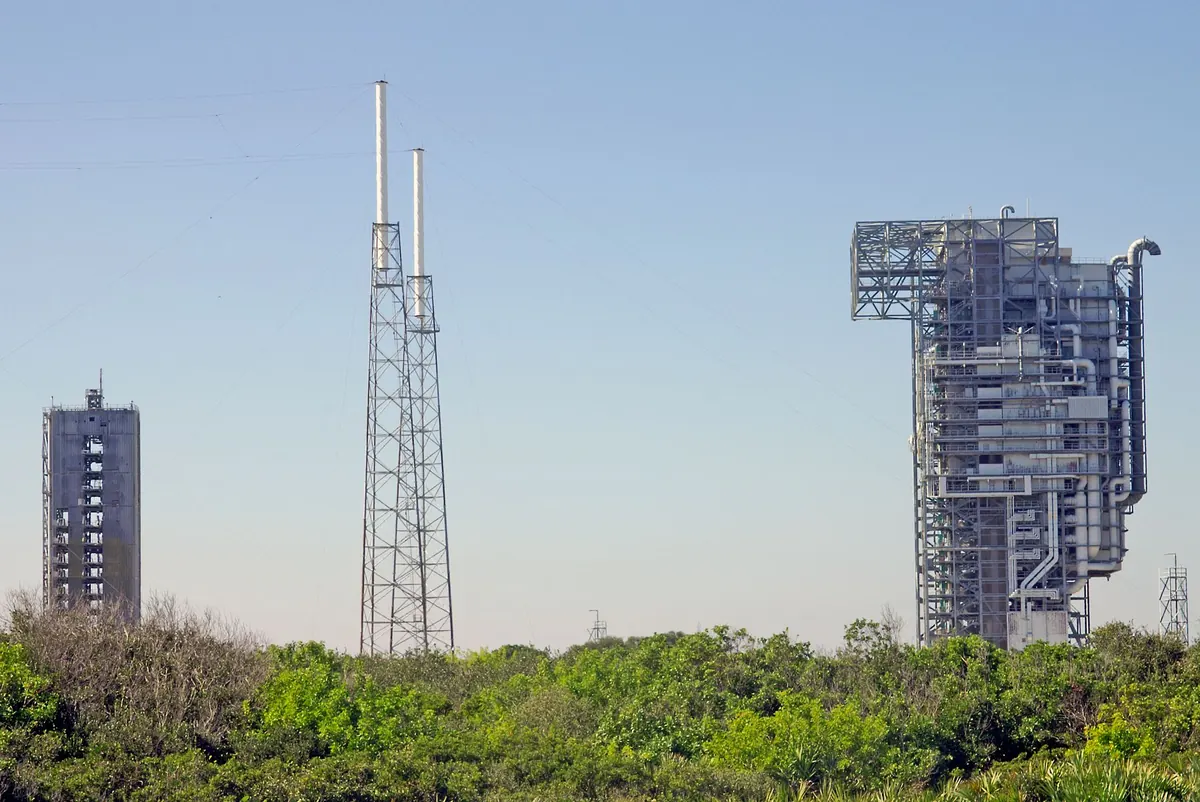
A satellite built in Glasgow or Harwell has, for most of the space age, been packed into a crate, flown to California or French Guiana, and launched by somebody else. That arrangement is changing. There are pads being built on a Shetland island, a licensed spaceport on a Cornish runway, and a stretch of peatland in Sutherland with planning consent and a rocket company attached. None of it is routine yet. But the map of where rockets leave Earth is being redrawn, and Britain is trying to put itself on it.
What follows is a tour of that map: who is building what, why the geography of the British Isles suits some orbits and rules out others, and why so many of these projects may never fire a rocket in anger.
Why Britain wants its own launch sites
Britain builds a lot of small satellites. Glasgow is one of Europe's busiest centres of small-satellite manufacturing — often described as building more spacecraft than any city outside California — and there is a dense network of component makers, software firms and ground-segment companies across the country. What Britain has lacked is a way to get those spacecraft off the ground without relying on someone else's rocket, someone else's range and someone else's schedule.
That dependency has a cost, and it is not only financial. Launching abroad introduces friction at every step. Satellites travel as high-value, fragile cargo. They pass through export controls, customs, insurance and handling chains that add cost and time, and a delay at the other end pushes the mission back too. A domestic launch site shortens that chain and gives operators a schedule they can influence. It also, in principle, lets a British company book a launch slot measured in months rather than waiting on a manifest that was set years earlier.
The manifest problem is the sharpest one. Most small satellites now fly as rideshare payloads, hitching a lift on a large rocket alongside dozens of others. That is cheap, but the customer takes the orbit they are given. If your Earth-observation satellite needs a specific local time of day when it crosses the equator, or your constellation needs a particular orbital plane, the rideshare you can afford may not be the rideshare you need. A dedicated small launcher flying from a British pad is meant to solve exactly that.
Britain's problem was never that it could not build satellites. It was that it had to ask somebody else's launch schedule for permission to fly them.
There is a strategic argument as well. Countries that can launch have a say in how orbits are used. The UK already registers its own satellites and carries the legal responsibilities that come with being a launching state under international space law — including liability if something goes wrong. Spaceports turn that paperwork into capability, and capability into influence in the forums where orbital traffic, debris rules and spectrum are negotiated.
Then there is the industrial argument closer to home. A launch site is an anchor tenant. Around it cluster fuel suppliers, payload integration facilities, range-safety software, testing services and engineering jobs. For places like Unst, Newquay and the north coast of Scotland, that is a rare chance to host a high-technology industry rather than export its graduates.
The spaceports taking shape
Britain's plans are a mix of the licensed, the funded and the aspirational. The main sites:
- SaxaVord Spaceport, Unst, Shetland — the first vertical launch spaceport to be licensed by the Civil Aviation Authority, built on a former RAF radar station at the northern tip of the UK. It has pads designed for small vertical rockets and has signed agreements with several launch companies, mostly European. Its early record is a reminder of how young the sector is: a static fire test on one company's first stage ended in an explosion in 2024, and no orbital launch has yet flown from the site.
- Spaceport Cornwall, Newquay — a horizontal launch site using the runway at Cornwall Airport Newquay. It hosted the UK's first orbital launch attempt in January 2023, when a rocket released from a converted jumbo jet failed to reach orbit after a second-stage fault. The operator behind that rocket went bankrupt within months, and the spaceport is now working to attract new tenants.
- Sutherland Spaceport, A' Mhòine — a vertical launch site on the north coast of Scotland, developed alongside Orbex and its Prime rocket and now owned by the launch company itself. It has drawn sustained environmental scrutiny because of the peatland it occupies, part of a protected landscape of bog, loch and moorland.
- Glasgow Prestwick — an airport-based horizontal launch concept, aiming to reuse existing runway, hangar and air traffic control infrastructure on the Ayrshire coast rather than build a new range from scratch.
- Machrihanish, Argyll — a former military airfield near Campbeltown, proposed for horizontal launch, with a long runway and a sparse surrounding population already in place.
- Llanbedr, Snowdonia — a Welsh airfield with ambitions around horizontal launch and reusable spaceplanes, close to a long-established aerospace testing and drone-flying heritage.
Each sits at a different stage. Some hold licences, some have planning consent, some have a runway and a plan. A handful of other sites appear, disappear and reappear in proposal documents depending on which funding round is open.
It is worth being precise about what a licence actually means. Since the Space Industry Act 2018 and the regulations that followed, the Civil Aviation Authority regulates UK launch and space activities. Operators need licences for the launch vehicle and its operator; the site needs a separate range licence covering everything from safety cases and insurance to the exclusion zones that keep aircraft and shipping clear during a countdown. A licence is permission to try, not a guarantee that a rocket will fly.
Vertical or horizontal? Two ways off the ground
Every British spaceport is built around one of two fundamentally different ways of reaching orbit, and the choice shapes the site, the rocket and the kind of missions it can fly.
Vertical launch
A rocket stands on a pad, lights its engines and climbs straight up. This is the familiar Cape Canaveral image, and it is the approach at SaxaVord and Sutherland.
- Strengths: more lift capacity for a given rocket, direct paths to polar and Sun-synchronous orbits, and no dependence on a carrier aircraft.
- Requirements: a concrete pad, a flame trench or deluge system, an integration building, fuel storage, and a large expanse of empty sea downrange for debris to fall into.
- Weaknesses: expensive fixed infrastructure, sensitive to wind and weather, and hard to adapt if the launch market shifts.
Horizontal launch
A rocket is carried under the wing or fuselage of a large aircraft, released at altitude and fired. Britain's most famous example is the converted Boeing 747 flown by Virgin Orbit on the 2023 Cornwall mission.
- Strengths: reuses an existing runway, hangar and air traffic control tower, which cuts capital costs dramatically. The aircraft can reposition to different latitudes and headings, offering flexibility on orbital inclination.
- Requirements: a certified carrier aircraft, a rocket robust enough to survive the release and ignition sequence, and a launch licence that covers both the aircraft and the rocket.
- Weaknesses: a performance penalty compared with launching from the ground, a limited supply of suitable carrier aircraft, and a dependence on weather at altitude rather than just at the pad.
The failure at Cornwall illustrates the appeal and the risk in equal measure. The aircraft performed flawlessly; the rocket reached space; the second stage shut down early because of a dislodged fuel filter, and the payload never made orbit. Horizontal launch lowers the barrier to entry without lowering the difficulty of the flight itself.
Why the north and west get the best orbits
Orbit choice, not local enthusiasm, decides where spaceports make sense. Most small satellites built in Britain are Earth-observation, communications or technology-demonstration spacecraft, and the majority want a Sun-synchronous or near-polar orbit — roughly 97 to 98 degrees of inclination, circling the planet from pole to pole while crossing each latitude at the same local time every day. That consistency is what makes images comparable from one pass to the next.
To reach that kind of orbit, you want to launch close to a pole and fly north or south over open water. Shetland, at around 60 degrees north, sits almost underneath the ascending path. A rocket from Unst can head north over the Norwegian Sea with nothing populated beneath it.
From a lower latitude, the same orbit costs more. The rocket has to turn as it climbs — a so-called dogleg manoeuvre — which burns propellant that would otherwise have been spent on payload. Cornwall works the other way: by launching west over the Atlantic it can reach lower-inclination orbits and, with a modest dogleg, Sun-synchronous ones too, all without overflying land.
The geography also explains what Britain will never do from home. Launch sites at high latitude are poor for reaching geostationary transfer orbit, the high equatorial belt where most big telecommunications satellites sit. Those missions need a site near the equator, and they will keep flying from Kourou or Cape Canaveral.
The economics question every spaceport faces
The uncomfortable part of the British spaceport story is arithmetic. Britain has more spaceport projects than any other European country, and the global market for dedicated small launch is smaller than the projections that justified many of them.
The competition is brutal. Rideshare berths on large reusable rockets are priced at a level no dedicated small launcher can easily match, and the operators of those large rockets have driven costs down year after year. A small launcher offers something a rideshare cannot — control over orbit, timing and discretion — but it must charge a significant premium to survive, and it needs customers willing to pay it.
Meanwhile, every site carries fixed costs whether or not a rocket flies: range safety staff, insurance, monitoring equipment, environmental compliance, maintenance of facilities in some of the windiest and most remote places in the country. A spaceport with two launches a year cannot cover those costs from launch fees alone.
That creates a chicken-and-egg problem. Launch companies want a proven site with a track record before committing; spaceports need anchor customers to raise the money to become proven. Several European launch startups have folded or paused, and the failure of one operator has already reshaped the plans of a British site.
The likely outcome is consolidation rather than a spaceport in every county. Two or three viable sites — probably one vertical range in the far north and one or two horizontal operations using existing airports — would cover most of the realistic demand. The rest will remain on planning documents.
None of that means the project is doomed. It means the winners will be determined by commercial discipline rather than by enthusiasm. The pads on Unst and the runway at Newquay are no longer hypothetical, and a satellite built in Glasgow now has a genuine prospect of leaving British soil. Whether it does so routinely, at a price the market will bear, is the question the next few years will answer.
Photo: Phyllis Lilienthal / Pexels